
Chain Care When British Roads Turn Wet
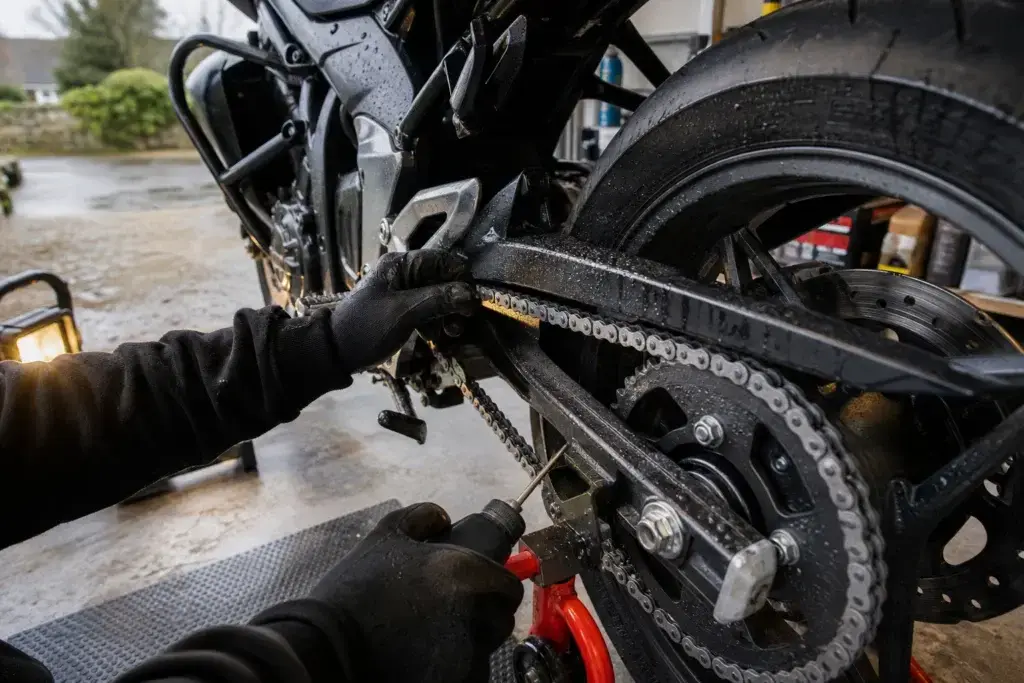
Wet British roads do not only put clean rainwater on a motorcycle chain.
Spray carries grit and road contamination into a moving system, while repeated washing can remove protection or drive dirt into vulnerable areas. The answer is not coating yesterday's paste with more lubricant.
Chain type, slack and approved products vary by motorcycle. Follow the owner's manual and chain manufacturer's guidance. Damage, abnormal wear or uncertain adjustment deserves a competent technician.
Inspect after the bike is secure
Switch off the engine and support the motorcycle through an approved method. Keep hands and clothing away from moving parts. Rotate the rear wheel by hand in sections only when the bike is stable; never run it in gear on a stand for cleaning.
Look for corrosion, damaged rollers, missing or damaged seals, stiff links and uneven condition. Inspect both sprockets where safely visible. Lubricant cannot repair wear.
Distinguish wet from dirty
A recently wet chain may need drying and protection according to product guidance. A chain coated in abrasive black paste needs suitable cleaning first. Adding lubricant without removing contamination can create a thicker grinding compound and more fling.
Use a cleaner approved for the chain type and a suitable soft brush. Avoid harsh solvents, wire brushes and high-pressure water that can harm seals or force contamination into components.
Protect tyres and brakes
Shield the rear tyre, wheel and brake surfaces from cleaner and lubricant. Apply precisely rather than filling the area with overspray. If a safety-critical surface becomes contaminated, stop and obtain component-manufacturer or professional advice.
Do not assume a visible wipe removes product absorbed by brake pads or spread across tyre tread.
Apply a controlled amount
Follow the lubricant's instructions for preparation, application point, distance and setting time. Rotate the wheel by hand and work consistently around the chain. More product does not mean more reaches the required area.
Remove only excess as instructed and allow the stated time before riding. A wet side plate and a stripe on the wheel are not evidence of correct lubrication.
Check slack through the exact procedure
The motorcycle manufacturer defines measurement position, loading, stand condition and acceptable range. Check more than one chain section because wear can be uneven.
An over-tight chain is not careful maintenance. Suspension movement changes the working geometry, and incorrect tension can load components. Adjustment also requires correct alignment and fastener handling; seek help when unsure.
Let exposure change inspection frequency
A motorway journey through heavy spray, a salted commute and a light shower create different contamination. Inspect after demanding wet use and washing while still meeting scheduled maintenance intervals.
Record cleaning, lubrication and adjustment. A need for frequent adjustment or returning stiff links can indicate a system nearing replacement.
Treat road salt separately
Salt is corrosive and should not remain on the motorcycle indefinitely. Wash through a suitable low-pressure method and dry the machine, respecting bearings, seals, electrics and finishes. Re-establish chain protection afterward where required.
General corrosion inhibitors and chain lubricant are different products. Never spray either indiscriminately near brakes, tyres, controls or hot parts.
Watch the front sprocket area
Residue can accumulate behind covers, but access may involve model-specific safety steps, fasteners and trapped debris. Follow service information rather than removing a cover casually.
If cleaning reveals leakage, abnormal wear or damage, do not simply hide it beneath fresh lubricant and refit the cover.
Reassess after unusual feel
Noise, vibration, tight spots or drive snatch can have several causes. Stop riding and inspect rather than using more lubricant as a diagnostic tool. Chains and sprockets are generally considered together as a wear system under manufacturer guidance.
Replacement requires correct parts, tools, alignment and fastener security. Professional fitting is sensible when any of those are uncertain.
A wet-road routine should be boring
Secure the motorcycle, inspect, clean only when required, dry, lubricate with control and verify slack by the manual. That order reveals condition before products conceal it.
British rain makes the routine more frequent, not more dramatic. A correctly maintained chain should not advertise the job through lubricant on the tyre or a pile of black residue around the wheel.
Carry the inspection into the next ride
After maintenance, verify that guards, covers, adjusters and fasteners are secure through the model-specific procedure. Remove every cloth and shield used to protect brakes and tyres. Roll the motorcycle by hand and look for abnormal resistance or sound.
Recheck after the first suitable journey if the manufacturer or work performed calls for it. Maintenance is complete only when the system has been verified, not when the aerosol returns to the shelf.