
Winter Motorcycle Maintenance Starts Before Winter
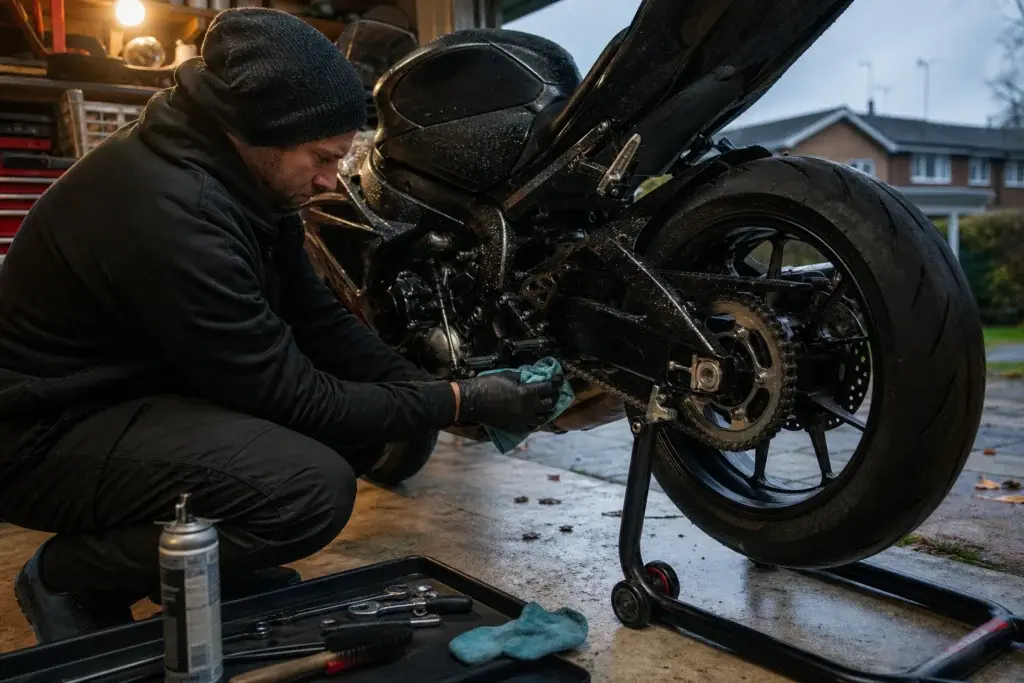
The first salted commute or frozen morning is a poor time to discover a worn tyre, weak battery or seized fastener.
Winter maintenance starts in early autumn because parts, workshop appointments and suitable working conditions still exist. Preparation should create a verified baseline, not a weekend of indiscriminate spraying.
Use the motorcycle manufacturer's service schedule and procedures. Safety-critical work, unfamiliar diagnosis and tasks requiring specialist tools belong with a competent motorcycle technician.
Review history before buying products
Gather service records, mileage and dates. Note time-based items as well as mileage intervals. Identify exact oil, coolant, battery and chain specifications from reliable documentation.
Unknown history is not a reason to guess. It is a reason to establish a professional baseline. A shelf of general motorcycle chemicals cannot replace the correct specification.
Inspect tyres while replacement is easy
Measure cold pressures and examine tread, sidewalls, valves and overall condition. Check legal requirements and tyre-manufacturer guidance. Repeated pressure loss, damage or uncertain ageing needs specialist assessment.
Booking a tyre in September is easier than finding one during the first cold week with the bike already unusable.
Give brakes a clean inspection
Check controls, visible wear, hoses, unions and fluid evidence through the model-specific method. Keep corrosion inhibitors, oil and chain products away from discs, pads and tyres.
Changed feel, leakage or contamination means no riding until assessed. Winter grip does not leave extra capacity for a questionable braking system.
Establish drive-system condition
Inspect a chain and sprockets for wear, corrosion, damage and correct slack. Clean and lubricate only with compatible products, rotating the wheel safely by hand. Belt and shaft systems have different requirements.
Frequent adjustment or tight links can signal replacement, not a need for more lubricant. Plan parts and fitting before road salt accelerates deterioration.
Identify coolant rather than matching colour
Coolant colour is not a universal chemistry code. Confirm the required specification and what is already in the system. Never open a hot, pressurised system, and investigate unexplained loss.
Service intervals and concentration affect corrosion and freeze protection. Professional testing or replacement is safer than mixing an uncertain top-up.
Test the battery plan
Identify battery chemistry and confirm any charger or maintainer is compatible. Inspect for damage and review starting or charging symptoms. Alarms and accessories can draw current during storage.
Do not start the engine briefly in an enclosed garage as a maintenance ritual. Follow manufacturer storage guidance and address repeated battery weakness before the cold supplies a roadside test.
Check lighting before commutes become dark
Clean and operate headlamp, rear light, brake light and indicators. Inspect lenses and use the correct procedure for headlamp aim. Confirm both brake controls activate the light.
Visibility products support but do not replace lighting, positioning and riding margin. Repair faults while daylight makes the work easier.
Protect finishes with precision
Wash and dry the motorcycle using suitable methods, removing contamination from trapped areas without forcing water into bearings, seals or electrics. Apply verified corrosion protection only where the product permits.
Shield braking surfaces, tyres, controls, seat and hot parts. “Cover the bike in ACF-50” or another product is not complete guidance; application limits matter.
Prepare the rider's equipment
Inspect protective clothing, closures, visor, vents and approved anti-fog systems. Test cold-weather layers for free control movement. Heated equipment needs correct installation and electrical capacity.
Dry gloves and boots thoroughly and replace damaged protective items according to maker guidance. Casual riderwear is not a substitute for certified equipment.
Create a winter inspection rhythm
Set dates for pressures, chain condition, battery state and washing after contamination. Adjust frequency to use and weather while maintaining official intervals. Record readings and work.
Patterns reveal a slow leak or increasing adjustment need sooner than memory. The log also improves workshop diagnosis.
Begin winter with choices
Early maintenance creates options: repair properly, book a workshop, change the route or store the motorcycle. Waiting until the first severe conditions removes those options and adds urgency.
Start before winter by learning the machine's current condition. The goal is not to guarantee riding through every forecast; it is to know whether the motorcycle is ready when a suitable day appears.
Check security and recovery plans
Darker evenings change where and how the motorcycle is left. Inspect approved locks, anchors and keys, and keep emergency contact or recovery information accessible without exposing it publicly. A maintained motorcycle can still be stranded by one lost key or an expired recovery arrangement.
Review the route home from regular winter journeys and identify safe stopping options. Preparation includes what happens when riding should stop, not only how the bike begins.