
Lead The Way – Cover The Rear Hoodie Drop
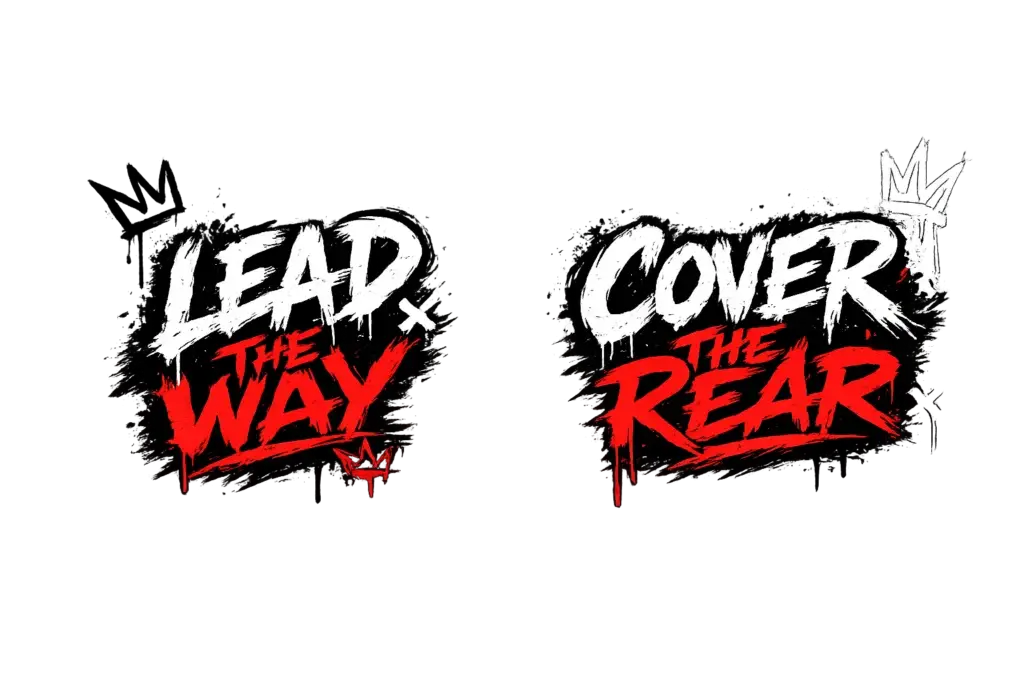
“Lead The Way – Cover The Rear” gives two riders complementary phrases, but it should not be read as assigning military roles on a public road. A lead rider can organise navigation and a rear rider can help notice separation; every participant still makes independent lawful decisions and remains responsible for their own space.
This archived launch story explains the paired design, not a group-riding system. Current garment options, customisation and ordering details must be confirmed through the live site.
The pair celebrates shared responsibility
One rider may know the route while another has more awareness of how the group is stretching. The phrases recognise that cooperation without claiming either person controls everyone else.
Roles can change with fatigue, weather or familiarity. Good groups adapt rather than preserving a title for pride.
A route plan matters more than formation
Share the destination, major turns, stops and what happens after separation. Each rider should have navigation or enough information to continue safely. Nobody should speed, cross a line or force an overtake to keep the group visible.
Wait at an agreed legal location. Do not block a junction or send a rider back against the flow of the route casually.
The rear position is not a rescue service
A rider at the back cannot diagnose every problem or protect others from traffic. They need their own margin and must not ride beyond ability to close a gap. If somebody stops, use the agreed process and assess the situation safely.
For larger or formal groups, use trained, lawful organisation appropriate to the event. Hoodies do not confer authority to marshal roads.
The artwork needs two complete halves
Each phrase should look intentional when worn alone. Shared typography, symbols and spacing connect the garments; the pair view reveals the fuller concept. Avoid leaving one wearer with what looks like an incomplete instruction.
Mock-ups should show solo and paired arrangements, while physical samples verify scale and alignment.
Individual taste can remain visible
The two riders may prefer different colours, print placements or garment fits. A coordinated system does not require identical uniforms. Define which features connect and where variation is allowed.
Current product images and custom proofs should make those differences explicit before production.
Record every option per person
Collect product, size, colour, phrase, placement and custom text separately for each wearer. Compare measurements with garments they already own. Do not assume partners share a preferred fit.
Version proofs clearly and obtain approval for both. One response should identify exactly which files it covers.
Keep protection claims out
Unless explicitly certified and described otherwise, these hoodies are casual riderwear. Matching back prints do not create conspicuity certification or physical protection. Suitable riding equipment remains an individual safety decision.
Casual layers must not interfere with armour, controls or helmet use.
Use the gift to create a flexible plan
Pair the hoodies with a proposed ride, event or cafe stop. Keep the date subject to weather and both riders' comfort. The design should celebrate time together, not turn the gift into an obligation.
Explain the roles affectionately so “cover the rear” does not sound like a permanent task imposed on the recipient.
Production involves two quality checks
Paired orders contain more opportunities for swapped sizes or wording. Printed-to-order production should check each garment and then the set. Read current lead times and allow carrier contingency.
Personalisation can affect returns. Preserve order confirmation and communicate through a private official channel.
Care may differ between garments
Follow each label even when the prints match. Wash, dry and iron as instructed, and keep both away from workshop chemicals. Different usage will make the pair age at different rates.
The meaning does not depend on preserving perfect visual identity forever.
Leadership keeps an exit open
The best lead rider creates a plan others can leave safely. The best rear rider observes without taking ownership of everyone. Both listen when conditions require change.
Lead The Way – Cover The Rear turns that cooperative idea into clothing, provided the slogans remain relationship language rather than unsafe road instructions.
Review the ride afterward
The pair can compare where the route became unclear, whether stops were well placed and when either person felt pressure. Treat the review as process improvement, not a contest over who rode better. Update the shared route or signals before the next journey.
That quiet conversation gives “lead” and “cover” a practical, caring meaning. Partnership improves when both people are allowed to question the plan.