
Donington Park Track Review: Fast, Flowing and Hard to Fake
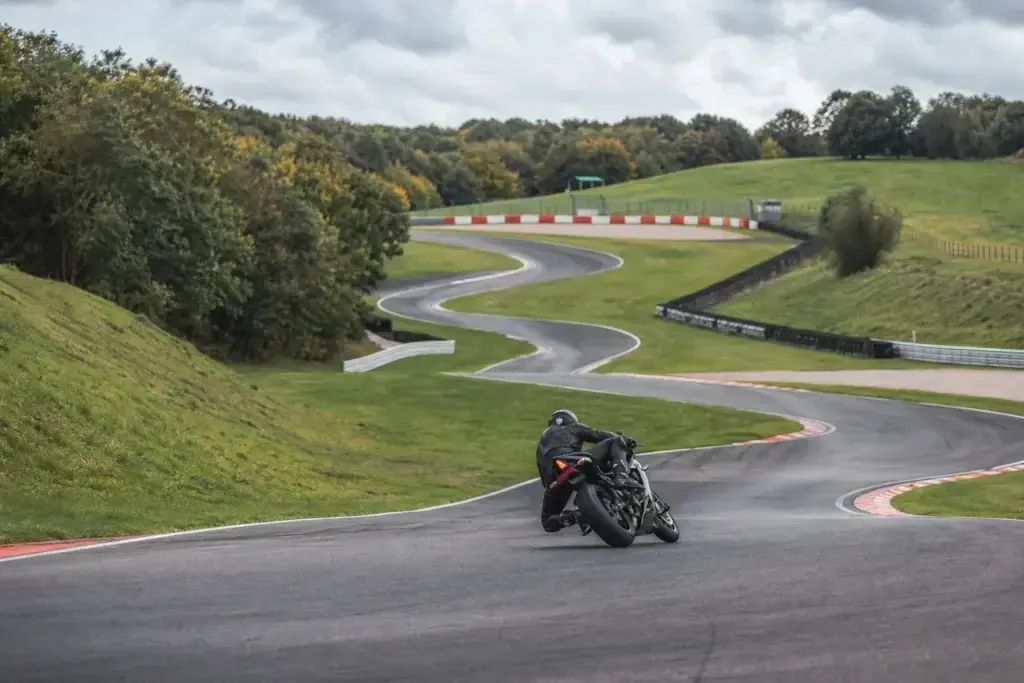
Donington Park is often described through flow, but flow is the result of accurate preparation rather than a mood a rider adopts.
Elevation and linked direction changes expose late vision, excess tension and attempts to solve one corner without considering the next. When the process works, the lap feels natural; when it does not, speed only makes the corrections larger.
Confirm the event configuration, rules and noise requirements with the organiser. This review describes learning character, not fixed lines, gears or braking points.
The circuit map misses the vertical story
Gradient changes the view, motorcycle loading and timing. Onboard footage can introduce corner order but cannot reproduce what appears over a rise or how a descent feels. Use sighting laps to rebuild the circuit from stable references and marshal posts.
Do not borrow a line from another motorcycle. Its rider and setup may be solving a different problem.
Flow begins before the first turn
A linked section works when braking, gear selection, body movement and vision occur with enough separation for the motorcycle to settle. If preparation is late, the rider carries unfinished work into the change of direction.
Reduce pace and ask an instructor which task needs to move earlier. Trying to create flow by holding more speed usually amplifies the original rush.
One exit can organise several seconds
The result of a corner continues into the next straight and sequence. A dramatic entry may look committed while damaging position and drive. Assess the complete link rather than celebrating one apex.
Session notes should describe cause and effect: what was seen earlier, which input became calmer and where attention became available.
Different layouts change priorities
Donington events may use different configurations. The Grand Prix extension introduces another rhythm and set of compromises. Confirm the layout before studying or packing, and avoid mixing references from videos of different laps.
Pit procedures and paddock access can also vary. Official event information should be saved and reviewed near the date.
Traffic breaks the perfect sequence
A track day is shared. Another rider may occupy the planned space or arrive with different strengths. Follow overtaking rules and adapt without abrupt line changes.
An interrupted lap is not wasted. It tests whether the rider can preserve observation and control when the ideal plan disappears. Speak to staff about persistent group mismatch.
Weather changes more than grip
Rain and wind alter visibility, reference contrast and rider tension. Treat every flag and official update as new evidence. Rebuild pace after conditions move.
Tyre pressures and choice need current advice for the exact product, motorcycle, pace and conditions from the tyre manufacturer or reputable trackside specialist.
Prepare the machine for repeated load
Inspect tyres, brakes, controls, fluids, chain and fasteners before travel. Confirm noise compliance. Between sessions, investigate changed lever feel, vibration, leakage or abnormal tyre condition immediately.
A motorcycle problem cannot be coached away. A riding uncertainty should not be diagnosed by replacing parts at random.
Coaching makes flow visible
Ask an instructor to watch one linked section or repeated feeling. External observation can show that the problem began earlier than the place it became noticeable.
Apply one change at a controlled pace and write the result. Spare attention is necessary for learning.
The paddock and journey matter
Bring hydration, food, weather layers, documents and a plan for fuel and recovery. Rest before concentration declines. Donington's pace can make a rider feel alert while mental accuracy is fading.
Treat the trip home separately. Public roads retain traffic, speed limits and surface hazards regardless of how good the final session felt.
Why it is hard to fake
Donington links decisions closely enough that an inconsistent method travels through several parts of the lap. Aggression may produce one exciting moment but cannot manufacture repeatable flow.
The circuit rewards riders who see early, prepare calmly and accept that the best lap may look undramatic. When the motorcycle moves through the landscape without a string of corrections, flow stops being a slogan and becomes evidence.
Give the next visit a defined purpose
Before returning, review notes and choose one question that remains unresolved. It might concern vision over elevation, the link between two sections or relaxation during traffic. Share that objective with an instructor rather than beginning the morning by chasing the previous best time.
Conditions will make the new day different. The notes supply context, not a command to reproduce old speed. Donington rewards a rider who arrives prepared to update the plan.
How the GP layout changes BSB racing
- Explore more motorcycle track-day guides
- See how the GP layout changes BSB racing
- Browse motorcycle circuit T-shirts
Explore the collection: See the Donington Park motorcycle clothing page for the matching hoodie, T-shirt and available accessories.